Apple Watch vs Garmin: Which Smartwatch Wins in 2026?
A Marathon Runner and an iPhone Owner Disagree
Ask a marathon runner and an iPhone power user which smartwatch to buy, and you will hear two different answers. That split captures the Apple Watch versus Garmin debate perfectly. One brand chases everyday convenience, the other chases endurance and training depth.
Apple builds a wrist computer that leans on your iPhone for messages, apps, and payments. Garmin builds a rugged sport tool that runs for days and lives for data. Both track your heart, sleep, and workouts, yet they feel worlds apart on the wrist.
This guide compares the two head to head for 2026 without the hype. It weighs battery, fitness depth, software, compatibility, and price across real routines. By the end you should know which platform actually fits your week.
If you are still exploring categories, our roundup of the best smartwatches offers a wider view. For pure activity tracking, the best fitness trackers guide is also worth a look.
Ecosystem Polish or Days of Battery, Pick One
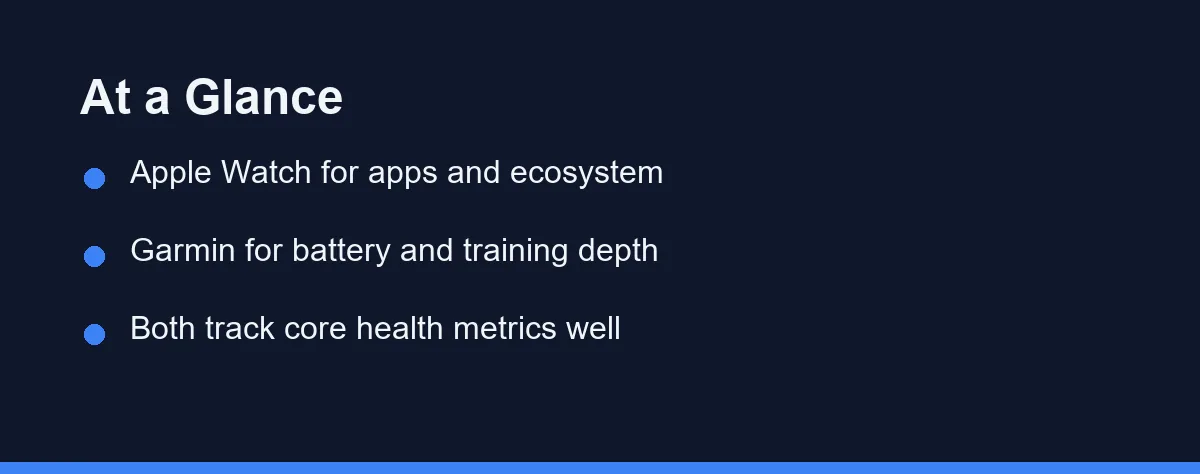
Apple Watch wins for most iPhone owners who want a polished, do-everything wearable. It handles messaging, payments, apps, and health in a single smooth package. The tradeoff is shorter battery life and iPhone-only support.
Garmin wins for athletes, outdoor users, and anyone who hates frequent charging. Its watches last days, track sports in depth, and pair with both iPhone and Android. The tradeoff is a less app-rich, more utilitarian experience.
In short, pick Apple for ecosystem and convenience. Pick Garmin for training depth and battery endurance.
Six Questions to Settle Before You Compare Models
Before comparing models, decide what matters most for your daily use. A clear priority list prevents overspending on features you will ignore.
Battery life is the first major fork. Apple Watch usually needs daily charging, while many Garmin models run for a week or more. Heavy GPS use shortens battery on both, but Garmin keeps a wide lead.
Fitness depth is the second factor. Garmin offers advanced metrics like training load, recovery, and detailed running dynamics. Apple covers core workouts well but stays simpler for elite training.
Ecosystem and apps form the third factor. Apple Watch shines for messaging, calls, and third-party apps tied to the iPhone. Garmin keeps apps minimal and focuses on sport and health data instead.
Phone compatibility is the final gate. Apple Watch only works with an iPhone, with no Android option at all. Garmin supports both platforms, which matters if you switch phones often.
Design and comfort also deserve attention before you buy. Apple favors a sleek, square case with many band options. Garmin often uses lighter, rounded cases built for long workouts. Try to picture the watch on your wrist all day.
Health sensors round out the picture for both brands. Apple and Garmin track heart rate, sleep, and blood oxygen on many models. Some watches add ECG, skin temperature, or stress tracking. Check the exact sensor list for any model you consider.
Five Families: Series, Ultra, Forerunner, Fenix, Venu
Both brands sell several tiers, from everyday models to rugged adventure watches. The right pick depends on budget and intended activity. Below are the main families to consider in 2026.
Apple Watch Series
The mainstream Apple Watch Series targets general users who want a balanced smartwatch. It blends notifications, health sensors, fitness tracking, and apps in a familiar design. It suits people who value convenience over extreme battery life.
Apple Watch Ultra
The Apple Watch Ultra targets outdoor and endurance users inside Apple’s ecosystem. It adds a larger battery, brighter screen, and rugged build for tougher conditions. It narrows the gap with Garmin while keeping full smartwatch features.
Garmin Forerunner
The Garmin Forerunner line focuses on runners and triathletes who want serious data. It delivers training metrics, race tools, and strong GPS in a light package. Battery life comfortably outlasts most Apple models.
Garmin Fenix and Epix
The Fenix and Epix series target adventurers, hikers, and multisport athletes. They offer rugged cases, maps, long battery life, and broad sport support. These are premium tools built for demanding outdoor use.
Garmin Venu
The Garmin Venu blends a bright display with everyday smartwatch style. It targets users who want lifestyle features plus Garmin’s health tracking. It is a friendly entry point for those new to the brand.
Battery, Maps, and Recovery Data Head to Head
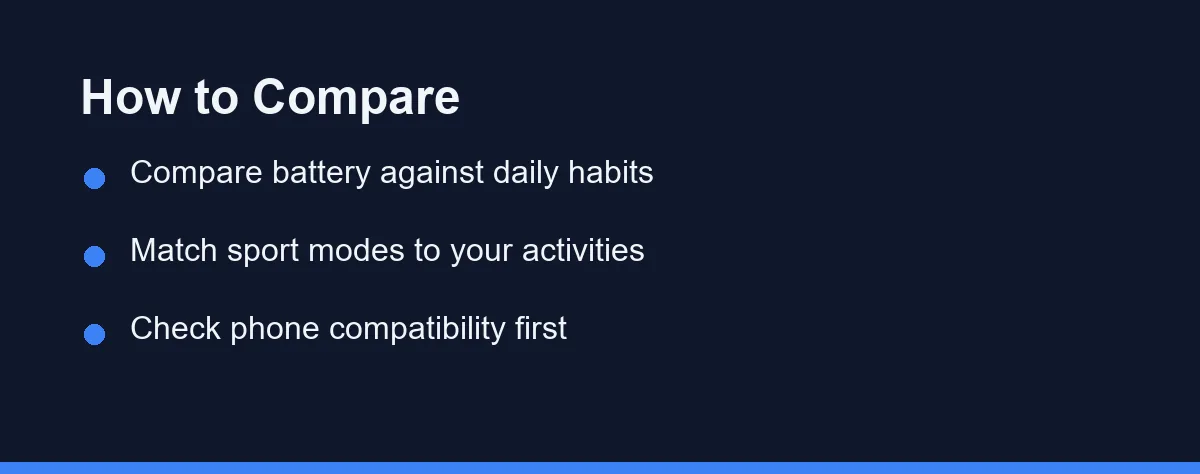
The table below summarizes how the two brands typically differ. Exact results vary by model, so treat this as a general guide.
| Feature | Apple Watch | Garmin |
|---|---|---|
| Battery life | About 1-2 days typical | Days to weeks depending on model |
| Phone support | iPhone only | iPhone and Android |
| Fitness depth | Strong core tracking | Advanced training metrics |
| Apps and ecosystem | Large, very polished | Focused on sport and health |
| GPS and mapping | Built-in GPS, maps via apps | Multi-band GPS, on-device maps on higher tiers |
| Recovery metrics | Basic trends, app-driven | Body Battery, training readiness, sleep score |
| Cellular option | Yes, on several models | Limited to a few models |
| Rugged build | Ultra tier only | Common on Fenix and Instinct |
| Best for | Everyday iPhone users | Athletes and outdoor use |
Apple leads on apps, communication, and overall smartwatch polish. Garmin leads on battery, training data, and cross-platform support. Neither is strictly better; they serve different priorities.
For audio pairing with either watch, see our best wireless earbuds guide. Active users may also like the best fitness trackers overview for lighter options.
Living With the Data
The numbers each watch collects only help if the app makes them clear. Apple spreads health data across the Fitness and Health apps, with a clean timeline and tight iPhone sync. Third-party apps like Strava fill any gaps for serious athletes.
Garmin Connect takes the opposite approach, packing dense charts and long-term trends into one hub. It rewards people who like to study training load and recovery over weeks. The learning curve is steeper, but the depth is genuine.
Think about how often you will actually open these apps. A casual user may glance at steps and call it done. A data-driven runner may live inside the graphs every evening.
Which Watch Fits Your Training Load
- Best for iPhone owners who want it all: Apple Watch Series. It handles messages, payments, apps, and health in one smooth package. For daily life on iOS, nothing feels more integrated.
- Best for marathon and triathlon training: Garmin Forerunner. Deep running dynamics, race tools, and multi-day battery keep serious athletes covered. The data reaches far beyond casual fitness.
- Best for hiking and the outdoors: Garmin Fenix or Instinct. Rugged cases, on-device maps, and week-long battery suit trails and remote trips. These are tools built to survive rough use.
- Best for battery life above all: any mainstream Garmin. Many models run a week or more between charges. If nightly charging annoys you, Garmin removes that chore.
- Best lifestyle watch on Android: Garmin Venu. It pairs a bright screen and solid health tracking with cross-platform support. Apple Watch is not an option off the iPhone, so Garmin wins by default here.
Name One Use Case, Then Check Your Phone

Start by naming your single most important use case. Daily messaging and apps point toward Apple, while marathon training points toward Garmin. A clear priority makes the rest of the decision easy.
Next, weigh your tolerance for charging. If a daily charge annoys you, Garmin’s endurance is a strong draw. If you charge nightly anyway, Apple’s battery is less of an issue.
Then check your phone. Android users should look at Garmin, since Apple Watch is iPhone-only. iPhone users can pick either brand based on their goals.
Finally, match the watch tier to your activities and budget. Casual users rarely need premium adventure models. Serious athletes may find the extra metrics genuinely useful.
What Each Watch Tier Costs
Both brands sell watches across a wide price range, from entry models to rugged flagships. The table below gives approximate figures to frame the tiers, not exact quotes. Every number is approximate at the time of writing, so confirm current pricing on the Apple or Garmin site.
| Model | Approximate price (USD) | Typical battery | Best suited to |
|---|---|---|---|
| Apple Watch SE | Around $250-300 | About 1-2 days | Budget iPhone users |
| Apple Watch Series | Around $400-450 | About 1-2 days | Everyday all-rounders |
| Apple Watch Ultra | Around $780-800 | Around 2-3 days | Outdoor iPhone users |
| Garmin Forerunner | Around $250-600 | Up to a week or more | Runners and triathletes |
| Garmin Fenix or Epix | Around $700-1000 | One to two weeks | Adventurers and multisport |
These ranges reflect typical pricing at the time of writing and move with sales and new releases. Older models often drop in price once a successor arrives. Confirm live figures on the official sites before you commit.
The right budget follows the tier you truly need, not the flashiest one. A casual user rarely benefits from a rugged adventure watch. A dedicated athlete may find the extra metrics worth every dollar. For accessories like power banks, our best portable chargers guide helps stretch battery life on trips.
Two Watches Answering Two Different Questions
Apple Watch and Garmin both build excellent wearables, yet they answer different questions. Apple asks how smoothly a watch can fold into your iPhone life. Garmin asks how long and how deeply it can track your training.
Your answer comes down to three things: battery tolerance, fitness ambition, and which phone you carry. Android users land on Garmin by default, since Apple Watch stays iPhone-only. iPhone users can pick either, guided by how hard they train.
If running is the main reason you are weighing these two, the choice narrows fast. Our Garmin vs Apple Watch for running comparison goes deeper on long-session battery, pace screens, and recovery metrics.
Use the comparison table, the use-case verdicts, and the pricing guide to shortlist a tier. Then confirm the latest specs and prices on the official sites before buying. Match the watch to your real week, and it will earn its place on your wrist.
FAQ
Is Apple Watch or Garmin better for serious athletes?
Garmin generally suits serious athletes better thanks to longer battery life, deep training metrics, and rugged multisport models. Apple Watch covers most fitness needs but trades endurance for smartwatch versatility.
Does Garmin work with an iPhone?
Yes, Garmin watches pair with both iPhone and Android through the Garmin Connect app. Apple Watch, however, only works with an iPhone and has no Android support.
Which smartwatch has better battery life?
Garmin clearly wins on battery, with many models lasting a week or more on a charge. Apple Watch typically needs charging every day or two depending on the model.
Do Apple Watch and Garmin work without a phone nearby?
Both can track workouts, store music, and record GPS on many models without a phone in range. You still need a phone for full setup, notifications, and syncing. Cellular Apple Watch models can also send texts and take calls on their own.
Which is better for sleep and recovery tracking?
Garmin focuses heavily on recovery, offering sleep scores, Body Battery, and training readiness on many watches. Apple tracks sleep stages and trends but leans on third-party apps for deeper analysis. Confirm which metrics a specific model reports before you buy.
Some links may be affiliate links. We may earn a commission at no extra cost to you.
This article was written with AI assistance. It is researched and fact-checked, not based on personal hands-on testing unless explicitly stated.
Comments
Post a Comment