Best E-Readers in 2026
Why Heavy Readers Still Buy a Second Screen
A phone can hold an entire library, yet most heavy readers still reach for a dedicated e-reader. The reason is simple: no notifications, no glare, and a screen that mimics paper. In 2026 that single-purpose focus is exactly what makes these gadgets so easy to love.
The category has also matured in quiet, useful ways. Warm front lighting, waterproofing, and even color E Ink now reach mainstream models. Choosing well means matching those features to how and where you actually read.
This guide breaks down the leading e-reader styles and who each one suits. It leans on widely reported specs and honest trade-offs rather than staged demos. The aim is to help you pick a reader you will happily use for years.
Real names anchor the comparison, from Amazon Kindle and Kobo to reMarkable and Boox. Each brand leans toward a different reader, whether a minimalist or a note-taker. Knowing those leanings makes the shortlist much shorter.
A 6-to-7-Inch Warm-Light Panel Suits Almost Everyone

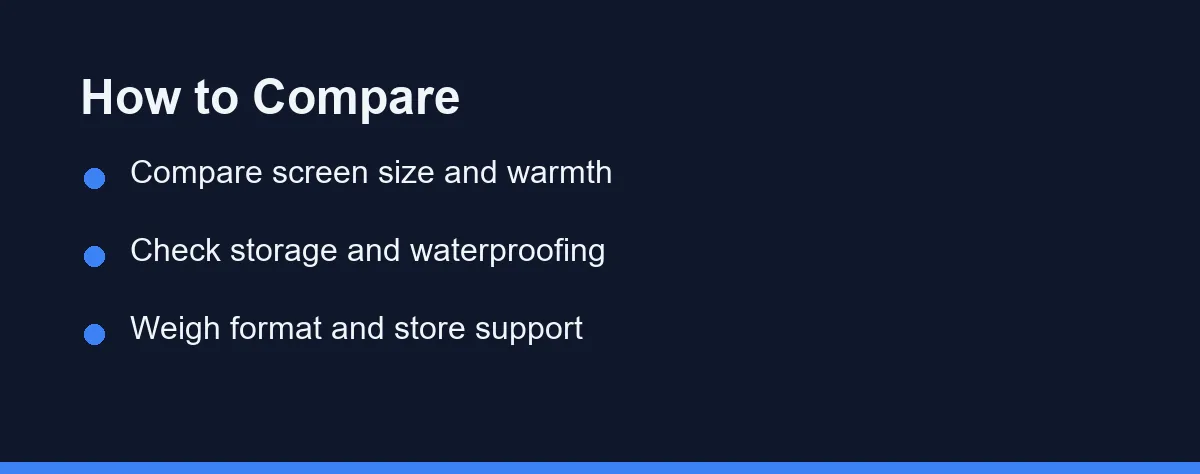
The best e-reader for most people is a mid-size E Ink model with adjustable warm light. A roughly 6 to 7 inch screen balances pocketability and reading comfort. Storage in the gigabytes range is plenty for thousands of books.
Choose your device around its bookstore and format support, not just hardware. A reader tied to a store you already use will feel seamless. One that handles open EPUB and library files offers more freedom.
For heavy readers who want note-taking, a larger writing tablet style e-reader makes sense. For travelers and bath readers, prioritize a waterproof rating. Match the device to your habits and you will rarely regret the choice.
Display, Store, and Build: The Three Deciders
A handful of features separate a great e-reader from a frustrating one. Knowing them helps you ignore marketing and focus on what matters. Below are the core factors worth weighing.
Display and Lighting
E Ink screens are the defining feature, offering paper-like text with no backlight glare. Look for higher resolution panels, often around 300 pixels per inch, for crisp letters. Adjustable warm lighting helps reduce blue light during night reading.
Ecosystem and Formats
Each major reader leans on a particular bookstore and set of supported file types. Some are closed and convenient, while others are open and flexible. Confirm that your preferred store and library service work before buying.
Build, Size, and Battery
Screen size affects both comfort and portability, so think about where you read. Waterproofing matters for poolside or bath reading sessions. Battery life on E Ink devices is measured in weeks, not hours.
Four Reader Styles, From Closed Store to Note Slate
The market includes a few dominant families plus capable alternatives. Each targets a slightly different reader, from minimalists to note-takers. The picks below summarize who each style suits, without inventing test results.
Mainstream Closed-Ecosystem Readers
These are the familiar, widely sold readers tied to one large bookstore. They excel at simplicity, fast syncing, and a huge catalog. They suit readers who want everything to just work in one place.
Open EPUB-Friendly Readers
This group emphasizes broad format support, including EPUB and easy library lending. They appeal to readers who borrow heavily from public libraries. Flexibility is the main draw, sometimes at the cost of a smaller native store.
Large Note-Taking E Ink Tablets
These bigger devices combine reading with handwriting and document markup. They suit students, professionals, and anyone juggling PDFs. The tradeoff is higher cost and a less pocketable size.
Compact and Budget Readers
Smaller and cheaper models keep the core reading experience affordable. They are ideal as a first e-reader or a travel spare. Expect fewer extras like waterproofing or premium lighting.
Seven Reader Types Scored on Openness and Screen
The table below compares the main e-reader styles by the factors that matter most. Use it to narrow your options before checking current models on official sites. Treat it as a framework, not a spec sheet for one product.
| Reader Type | Typical Screen | Format Openness | Standout Strength | Best For |
|---|---|---|---|---|
| Mainstream closed | 6 to 7 inch | Limited | Catalog and simplicity | General readers |
| Open EPUB-friendly | 6 to 8 inch | Broad | Library and format flexibility | Library borrowers |
| Note-taking tablet | 8 to 11 inch | Moderate | Reading plus handwriting | Students and pros |
| Compact budget | 6 inch | Varies | Low price and portability | First-time buyers |
| Premium waterproof | 7 inch | Limited | Durability and lighting | Frequent travelers |
| Color E Ink | 7 to 8 inch | Varies | Color covers and comics | Comics and magazines |
| Kid-friendly | 6 to 7 inch | Limited | Parental controls | Young readers |
The comparison shows there is no single winner for everyone. Closed ecosystems trade flexibility for convenience and catalog depth. Open and note-taking devices reward readers with specific, demanding needs.
Front Light, Fonts, and Page Turns
The reading experience lives in small details that spec sheets rarely capture. Adjustable warm light lets you shift from cool daylight to a cozy amber at night. That single feature can make late reading far easier on tired eyes.
Font control matters more than many buyers expect. Larger sizes and adjustable spacing help readers with weaker vision enjoy long sessions. Most modern readers offer several typefaces and bold options.
Page turns feel different across devices too. Physical buttons suit one-handed reading in bed, while a pure touchscreen keeps the design clean. Picture your usual reading posture before deciding which layout fits.
Ecosystem Lock-In to Consider
Every e-reader ties you loosely to a store and a set of formats. Kindle leans on Amazon’s catalog and its own file types, which is smooth but closed. Kobo and others lean more open, handling EPUB and library loans with less friction.
Think about the books you already own before switching brands. Moving a large library between ecosystems can mean converting files or losing some titles. Readers deep in one store often stay there for good reason.
If you value freedom, an open EPUB reader keeps your options wide. If you value convenience, a closed ecosystem simply works. Neither choice is wrong, but it shapes years of reading ahead.
Which Reader Fits Your Library Habits
- Best for most readers: a mid-size Kindle Paperwhite or Kobo Clara. A roughly 6 to 7 inch E Ink screen with warm light suits daily reading. Both add waterproofing and a large store.
- Best for library borrowers: a Kobo reader. Built-in OverDrive and open EPUB support make library loans painless. Readers who borrow heavily gain the most freedom here.
- Best for note-taking: Kindle Scribe, Kobo Elipsa, or reMarkable. These larger E Ink tablets pair reading with handwriting and PDF markup. Students and professionals juggling documents benefit most.
- Best for travel and bath reading: a waterproof Kobo Libra or Kindle Paperwhite. An IPX rating guards against splashes by the pool or tub. Frequent travelers gain real peace of mind.
- Best on a budget: a compact entry Kindle or Kobo Nia. These keep the core reading experience affordable. They make a great first e-reader or a spare for trips.
Read Your Own Habits Before Any Spec Sheet

Start by identifying where and how you read most often. A commuter has different needs than a student marking up PDFs. Your habits should drive the decision more than any spec.
Match the Ecosystem First
Pick the bookstore or lending service you already rely on. A reader that connects easily to your library will get far more use. Fighting format conversions every week wears thin quickly.
Size and Comfort Matter
Hold a sense of the device in your mind for one-handed reading. Larger screens help with PDFs and note-taking but reduce portability. Most casual readers stay happiest in the 6 to 7 inch range.
Think About Extras
Decide whether waterproofing, page-turn buttons, or stylus support are must-haves. These features add cost, so include only what you will truly use. If you also track reading habits or fitness, our best fitness trackers guide complements a healthy screen-light routine.
For a broader sense of personal gadgets that pair well with reading, see our best smartwatches overview. Building a kit you enjoy keeps you reading more.
From Budget Compact to Note Taker
E-reader pricing runs from affordable compact models to premium note-taking tablets. The table below gives approximate figures by type to frame the tiers. Every number is approximate at the time of writing, so confirm current pricing on the maker’s official site.
| Reader type | Approximate price (USD) | Typical screen | Standout feature |
|---|---|---|---|
| Compact budget | Around $100-120 | 6 inch | Low price and portability |
| Mainstream mid-range | Around $140-180 | 6 to 7 inch | Warm light and waterproofing |
| Premium waterproof | Around $180-260 | 7 inch | Ergonomic grip and page buttons |
| Note-taking tablet | Around $340-450 | 8 to 11 inch | Handwriting and PDF markup |
| Color E Ink | Around $220-280 | 7 to 8 inch | Color covers and comics |
These ranges reflect typical pricing at the time of writing and shift with sales and new releases. Ad-supported versions and bundles can lower the entry price. Confirm live figures before you commit.
Storage rarely limits an e-reader, since even entry models hold thousands of books. The bigger cost drivers are screen size, waterproofing, and stylus support. Pay only for the features you will genuinely use.
The Reader That Disappears Into the Book
The best e-reader is the one that disappears into your reading, not the one with the longest spec sheet. Ecosystem and format support matter first, then screen size, waterproofing, and extras. Get that order right and the device fades into the background.
In 2026 the category is strong at every price tier, from pocket companions to note-taking slates. Kindle and Kobo lead the mainstream, while reMarkable and Boox serve writers and tinkerers. There is a genuine fit for almost every reading habit.
Use the comparison table, the use-case verdicts, and the pricing guide to shortlist a model. Then confirm the latest specs and prices on official sites before buying. Match the reader to how you actually read, and it will earn its place on your nightstand.
Most shortlists narrow to the same two names, and the decision turns on store lock-in and file formats rather than hardware. Our Kindle vs Kobo comparison covers which library you are really committing to.
FAQ
Are e-readers better than reading on a phone or tablet?
For long-form reading, most people find e-readers easier on the eyes because E Ink mimics paper and reduces glare. They also avoid the notifications and apps that interrupt reading on a phone. Tablets remain better for color content and mixed media.
Do all e-readers support library books and ebooks I already own?
Support depends on the ecosystem and file formats a device accepts. Some readers are tied closely to one store, while others handle EPUB and library lending more openly. Always confirm format and library compatibility before buying.
Is a waterproof e-reader worth the extra cost?
If you read in the bath, by a pool, or at the beach, waterproofing adds real peace of mind. For purely indoor reading it is a nice bonus rather than a necessity. Weigh how and where you actually read.
Do e-readers work with library books?
Many do, but it depends on the ecosystem and formats a device accepts. Kobo readers include OverDrive for library loans, while Kindle uses its own library flow in supported regions. Confirm library and format support before you buy.
Are color E Ink e-readers worth it?
They add color for covers, comics, and highlights, which some readers love. The trade-offs are a slightly grainier screen and a higher price than standard models. For mostly text reading, a sharp black-and-white panel still looks best.
Some links may be affiliate links. We may earn a commission at no extra cost to you.
This article was written with AI assistance. It is researched and fact-checked, not based on personal hands-on testing unless explicitly stated.
Comments
Post a Comment