Fitbit vs Garmin for Beginners

Introduction
Buying your first fitness tracker should feel exciting, not overwhelming. Yet the choice between Fitbit and Garmin trips up many beginners. Both brands are trusted, and both make good devices.
The confusion comes from their different personalities. Fitbit built its name on simple, friendly daily tracking. Garmin grew from serious sports and outdoor gear.
For a beginner, that difference shapes everything. One brand nudges you toward easy habits, the other toward detailed training. Neither is wrong, but one likely fits you better.
This guide compares Fitbit and Garmin for people just starting out. We look at app simplicity, training depth, battery life, and price. The goal is a confident first purchase.
Quick Answer

For most beginners, Fitbit is the easier place to start. Its app is clean, its metrics are simple, and its daily goals feel approachable. That lowers the friction of building new habits.
Garmin is the stronger pick if you plan to train seriously. It offers deeper workout data, GPS-focused features, and long battery life on many models. Beginners with athletic goals often grow into it happily.
So the honest answer depends on your goals, not the brand’s prestige. Choose Fitbit for easy habit-building and clear daily stats. Choose Garmin if detailed training data appeals to you now. Our smartwatch vs fitness tracker guide helps if you are still deciding the category.
What to Look For
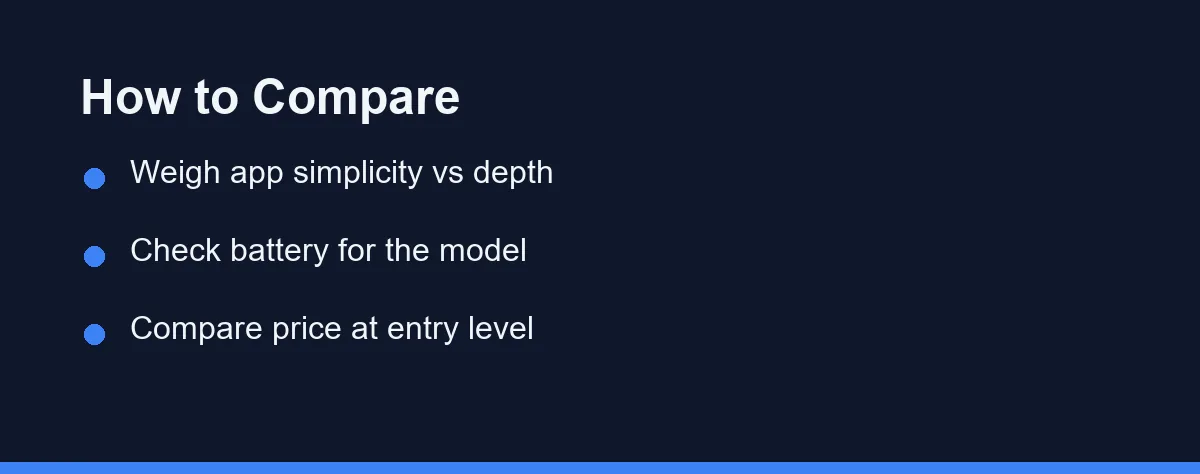
Start with app simplicity versus depth. Fitbit’s app is designed to be glanceable and encouraging. Garmin’s app offers more data, which can feel powerful or busy depending on you.
Battery life is a real quality-of-life factor. Some Garmin models are known for long runtimes between charges. Fitbit trackers also last several days on many models, so check the specific device.
Consider the metrics you will actually use. Steps, sleep, and heart rate come standard on entry models. Advanced training load and recovery data matter more once you train regularly.
Comfort and fit deserve attention too. A tracker you find comfortable is one you will keep wearing. Look at band options and screen size for your wrist and habits.
Finally, think about the ecosystem you may join. Each brand has its own app, community, and optional subscription. For heart-health context, the American Heart Association offers useful activity guidance. Our best fitness trackers roundup lists strong entry options.
Top Options
You do not need a flagship device to begin. Both brands sell approachable entry-level trackers. Here is how the two lines suit a beginner.
Fitbit for Simple Daily Tracking
Fitbit shines at making activity feel easy and rewarding. Its app highlights steps, sleep, and simple goals without clutter. Gentle nudges and streaks help beginners stay consistent.
The trade-off is depth. Serious athletes may eventually want more training detail. But for building healthy daily habits, that simplicity is a genuine strength.
Fitbit’s entry models cover the essentials most beginners need. You can track movement, sleep, and heart rate from day one. Confirm which features each model includes on the official site.
Garmin for Training-Minded Beginners
Garmin appeals to beginners who suspect they will train seriously. It offers deeper metrics, strong GPS features, and long battery life on many devices. That headroom means you may not outgrow it quickly.
The trade-off is a steeper learning curve. The data can feel like a lot at first. Beginners willing to grow into it often value the extra insight.
Garmin’s entry-level trackers still cover the basics well. You get steps, sleep, and heart rate alongside room to expand. Check the specific model’s features and battery rating before buying.
Choosing by Growth Path
A useful way to decide is to picture six months ahead. If you expect casual, habit-focused use, Fitbit’s simplicity wins. If you expect structured workouts, Garmin’s depth pays off.
Neither choice locks you in forever. Trackers are replaceable as your goals change. But matching the tool to your likely path reduces early frustration.
Feature Comparison
The table below compares the two brands for a beginner. Treat it as a general guide, since features vary by model. Always confirm details for the specific device on the official site.
| Factor | Fitbit | Garmin |
|---|---|---|
| App simplicity | Very approachable | Data-rich, steeper curve |
| Training depth | Basic to moderate | Deep and detailed |
| Battery life | Several days on many models | Often longer on many models |
| GPS focus | Present on some models | Strong across many models |
| Best beginner fit | Habit-building | Training-minded |
The rows sketch a clear divide. Fitbit optimizes for easy, encouraging daily use. Garmin optimizes for depth and endurance features.
For a beginner, that difference is the whole decision. Ask what you want in six months, not just today. The brand that matches your goals will feel right longer.
How to Choose

Begin by naming your main fitness goal. Casual movement and better sleep point toward Fitbit. Structured training and outdoor activity point toward Garmin.
Next, pick an entry-level model rather than a flagship. Beginners rarely need premium features on day one. Starting simple keeps cost and complexity low.
Then check the specific model’s features and battery. Specs vary widely within each brand’s lineup. Confirm the details you care about before you buy.
Also consider comfort and daily wearability. A tracker only helps if you wear it consistently. Choose a size and band that fit your routine.
Finally, factor in any subscription and ecosystem. Some advanced insights sit behind optional paid tiers. Decide whether you need those now or can start free. Our apple watch vs garmin guide helps if you also weigh smartwatches.
Pricing: What to Expect
Both brands span a wide price range, from entry trackers to premium models. Beginners can start well without spending at the top. Confirm current pricing on the official site, as of 2026, since prices change often.
Entry-level Fitbit and Garmin trackers cover the core metrics. They handle steps, sleep, and heart rate for everyday users. That is usually enough to build lasting habits.
Higher-priced models add GPS, advanced training data, and richer displays. These matter more as your goals grow. Delay that spending until you feel a real limit.
Watch for optional subscriptions on top of hardware. Some deeper insights require a paid membership. Factor any recurring cost into your true budget before deciding.
Common Mistakes to Avoid
Beginners tend to make a few predictable tracker mistakes. Avoiding them leads to a happier first purchase.
Do not overbuy features you will not use. A flagship packed with training tools can overwhelm a casual user. Match the model to your real goals.
Do not ignore battery life and charging habits. A tracker you forget to charge helps no one. Pick a runtime that fits your routine.
Do not assume all models in a brand are identical. Features and battery vary widely across a lineup. Confirm the specific model’s specs before buying.
Do not overlook comfort and fit. An uncomfortable band ends up in a drawer. Wearability quietly decides whether tracking becomes a habit.
Conclusion
For beginners, Fitbit and Garmin both make excellent first trackers. Fitbit wins on simplicity, encouragement, and easy daily habits. Garmin wins on training depth, GPS features, and long battery life.
The right choice follows your goals, not the brand name. Casual, habit-focused users tend to prefer Fitbit. Training-minded beginners tend to grow into Garmin.
Name your main goal, choose an entry-level model, and confirm its specific features. Prioritize comfort and battery so the tracker stays on your wrist. That consistency matters more than any single spec.
Start simple, and upgrade only when you outgrow the basics. For related reading, see our guides on the best fitness trackers and smartwatch vs fitness tracker.
FAQ
Is Fitbit or Garmin better for beginners?
For most beginners, Fitbit is the gentler starting point thanks to its simple app and clear daily metrics. Garmin offers deeper training data that suits people who plan to train seriously. The best pick depends on whether you want easy habits or detailed sport tracking.
Which lasts longer on a charge, Fitbit or Garmin?
Battery life varies by model, but Garmin devices are often known for longer runtimes between charges. Fitbit trackers also last several days on many models. Always confirm the rated battery life for the specific model on the official site.
Do I need an expensive model to start?
Yes, both brands offer entry-level trackers aimed at everyday users. You do not need the most expensive model to track steps, sleep, and heart rate. Start simple and upgrade only if you outgrow the basics.
Some links may be affiliate links. We may earn a commission at no extra cost to you.
This article was written with AI assistance. It is researched and fact-checked, not based on personal hands-on testing unless explicitly stated.


Comments
Post a Comment